Ashtanga In The Time of Covid
Rooted In Yoga with Fee | MAR 3, 2022
Ashtanga In The Time of Covid
Rooted In Yoga with Fee | MAR 3, 2022
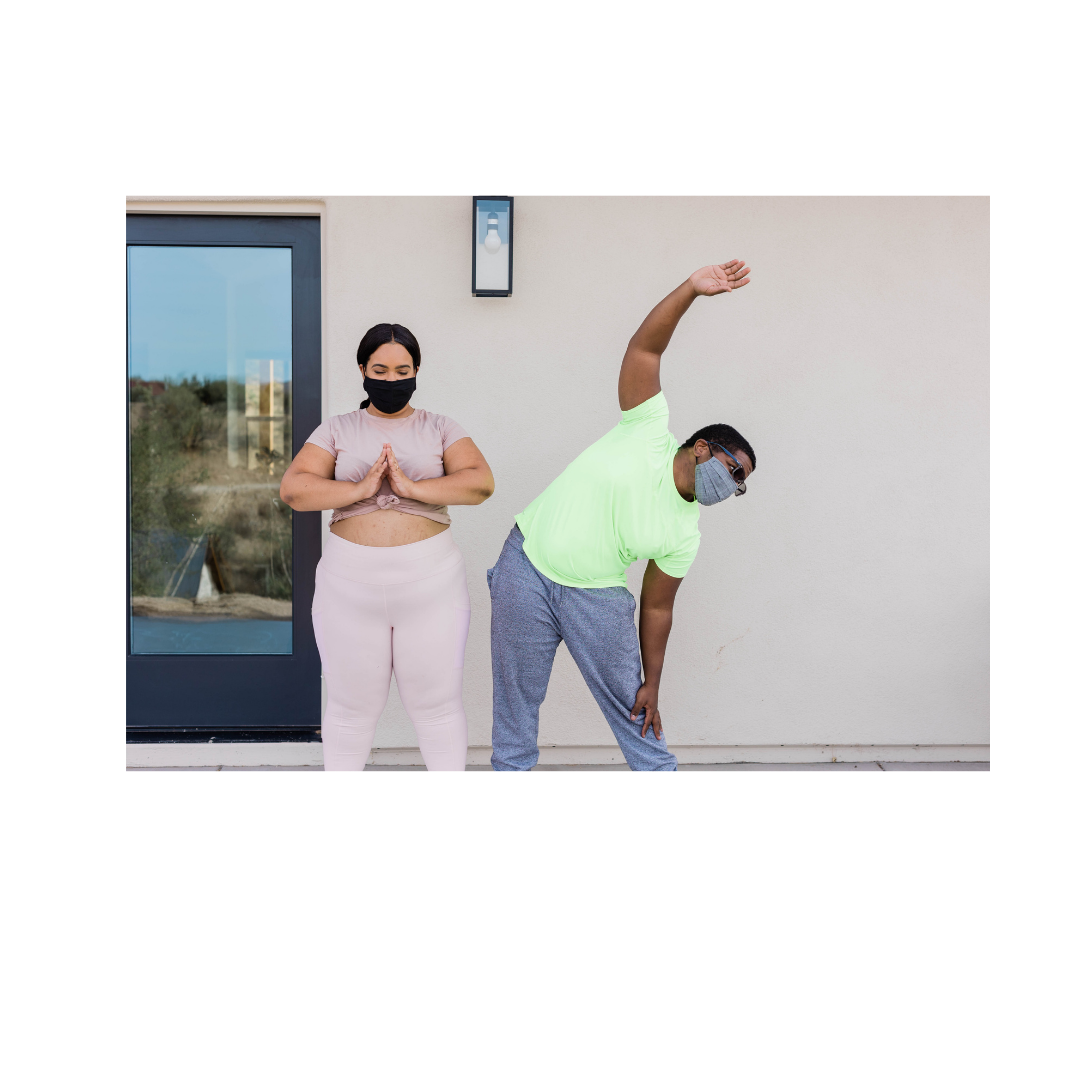
Yoga, which translates to union, is the science of uniting the body, mind, and spirit. Humor me a bit, it's my first blog post. I want to go wide so I can go deep. Let's break down where yoga comes from in order to understand what Ashtanga is.
For simplicity, the history of Yoga can be divided into five broad periods. Vedic Yoga, Pre-Classical Yoga, Classical Yoga, Post-Classical Yoga and Modern Yoga. Yoga originated in India 5,000 or more years ago by the Indus-Sarasvati civilization, named after two rivers, that flowed through Northern India in early antiquity.
We can neatly define the period of Vedic Yoga by the Vedas, sacred scriptures connected with the ritual life of Ancient Indians. Yoga was first described in written form in the Rig-Veda but came into its own during the pre-Classical era with the Upanishads. These gnostic texts expound the hidden teaching about the ultimate unity of all things and greatly influenced the Bhagavad-Gita. Its central teaching point: that to be alive means to be active and if we want to avoid difficulties for ourselves and others, our actions must be benign and also go beyond the grip of the ego. This era is attributed to the development of deep meditation techniques through which yogis can transcend the mind and body and discover their true nature.
That brings us to the Classical era and its greatest contribution, Pantajali, an Ancient Indian sage and his teachings, the Yoga Sutras, a collection of aphoristic statements which can be described as yoga theory and practice. Pantajali synthesized and organized knowledge about yoga from the older traditions. He introduces us to Ashtanga, translated as the Eight Limb path. Patanjali’s analogy is the perfect image. Wisdom and spirituality unfold in the same manner as a tree grows. The eight aspects of yoga are like limbs of a tree. Every tree in a forest has the same goal: to reach toward the light. One tree’s method is not better than another’s.
The eight limbs are: The Yamas and The Niyamas, Asana, Pranayama, Pratyahara, Dharana, Dhyana, Samadi.
The Post-Classical era is designated post-Patanjali and the organization of Ashtanga. Pantajali gave a framework to the postures, influencing gurus to probe the hidden potential of the body by expanding upon them. His students' curiosity combined with the influence of alchemy created various branches of schools of yoga and one approach to what we know today as Hatha Yoga. The Hatha yogic path explores possibilities through advanced yogic technique to energize the physical body to such a degree as to alter its biochemistry. As such, physical yoga poses are a form that is widely practiced throughout the world. This amateur yet important form occupies more than its fair share of real estate in our consciousness when it comes to what we understand yoga to be. Simply visit Tik Tok to find endless examples online.
The history of Modern Yoga is thought to begin with the Parliament of Religions held in Chicago in 1893 when yoga came west. A great exponent of modern times Hatha Yoga was Sri Krishnamacharya. He practiced and taught the Viniyoga system of Hatha Yoga until his last days. He influenced many students who went on to become teachers in their own right. B.K.S. Iyengar, K. Pattabhi Jois and Indra Devi to name a few.
K. Pattabhi Jois, student of Sri Krishnamacharya, founder of Ashtanga Yoga Research Institute in Mysore, India, developed and popularized the modern form of Ashtanga Vinyasa yoga. Ashtanga Vinyasa is an organized system of postures performed in order and linked through the union of breath and movement. In total there are six series in the Ashtanga Vinyasa system. The Primary Series also known as Yoga Therapy, The Second Series also known as The Intermediate Series and The Third, Fourth, Fifth, and Sixth Series which are all series for advanced practitioners. K. Pattabhi Jois brought his style, Ashtanga Vinyasa, to the West - influenced and taught thousands of students around the globe - to include David Swenson and Norman Allen. K. Pattabhi Jois sexually abused some of his yoga students by touching inappropriately during adjustments. Sharath Jois has apologized for his grandfather’s improper adjustments.
So why Ashtanga? It offers each person who gets curious a course to discover this question and answer it on our own terms. It is a psychophysical approach to life, with a pathway to self-understanding and an opportunity to grow towards enlightenment. Personal insights manifest through the regulation of practice. The daily one hour to an hour and a half practice gives permission to create a relationship with oneself, noticing what we notice, without judgment, feeling into our bodies and opening blocked energetic pathways with the potential to fortify our human experience.
I offer up the extent of my knowledge and today that is creating access to curious beginners. My practice was my most valuable tool as a community organizer and it has supported me gracefully through a pandemic. I am a student of Ann Richardson Stevens, who is a student and mentee of Beryl Bender Birch, creator of Power Yoga, and student of Norman Allen. My yogic lineage fundamentally flows back to K. Pattabhi Jois' teachings and influence.
I've come to yoga with curiosity in different iterations, some physical, some astral. Each time I leave with more volume. I’ve decided to offer Ashtanga Vinyasa at Rooted in Yoga Studio with Fee because I want to share what I’ve learned with as many people as I can and especially with Black and Brown folx. I want my offering to remind people of our inherent sovereign power. By practicing this system, we are able to feel alchemy in our bones through cultivating presence in our mind and body connection. We can ease our pains, increase strength and flexibility that will physically carry us across other activities in our lives. Most of all, it offers the opportunity to hone and refine our true essence. And I think we need this reminder now more than ever!
As modern history is still being written, evidenced in yoga’s evolution into an inclusive practice where women, men, and Black teachers are acknowledged and honored, I’m curious what will define the next period of yoga. With the expansion of our virtual realities creating more access to the practice than ever in history, could it be possible that COVID has shaped the end of an era?
Here is my offering.
Virtual
UnStudio Experience
Daily 1HR
Deconstructed
Ashtanga for Beginners
The Primary Series
Rooted in Yoga with Fee
I’ve never been great at proper grammatical citation of sources. However, below are the sources that supported my writing. I relied on the history of yoga from the first author and more nuisance in the definition of Ashtanga from the second author.
Feuerstein, G. (1998) The Yoga Tradition. Hohm Press
Swenson, D. (2007) Ashtanga Yoga: The Practice Manual. Ashtanga Yoga Productions
Rooted In Yoga with Fee | MAR 3, 2022
Share this blog post
 OfferingTree